
Construction article
Painting and Drywall: The Finish Depends on the Substrate
Wall and ceiling repairs, finishing levels, and paint only last when the board, joints, and preparation are specified — not hoped for.
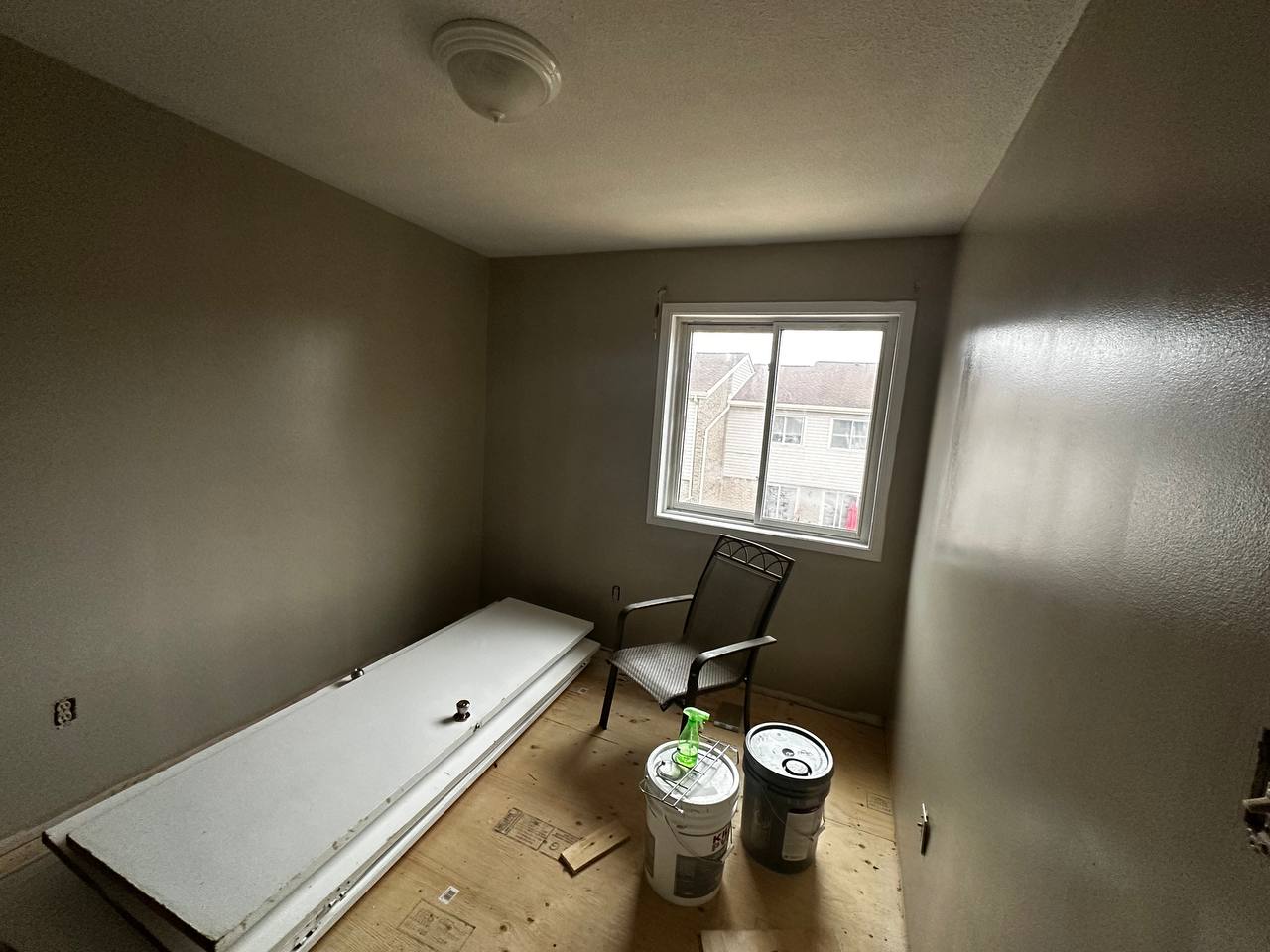
A painted room is judged in raking light. Every missed fastener, proud joint, and unprimed patch shows up after the furniture is back. Painting and drywall work in Ontario renovations is therefore mostly preparation: board, joints, repairs, sanding, priming, and protection. The colour is the last short chapter.
This matters on GTA projects because many interiors are renovations, not new boxes. Existing walls are out of square. Old texture meets new board. Occupied rooms cannot be left as sanding booths. The scope has to name the finish level, not only the paint brand.
Drywall is a system
Hanging board, taping, and finishing are different labour with different standards. A utility room can accept a lower finish level than a living room with grazing afternoon sun. If the renovation includes new framing, the drywall plane is only as good as the studs. Shimming and backing belong to carpentry; they should not be hidden with extra compound.
Repairs — water stains, popped fasteners, cracked corners — need the cause addressed. Painting over a rusting fastener or a damp corner is how the same blemish returns. If the stain is from an exterior leak, the wall finish should wait on restoration or envelope work.
Ceilings, bulkheads, and transitions to existing plaster or older drywall are where “just paint it” quotes come apart. Those junctions should be inspected and specified. A bulkhead that hides a beam or a duct still has corners, access panels, and a meeting with the wall plane. If those are not finished to the same level as the field, the room will always look unfinished in photographs and in late-day light.
Skim coats and texture matching on older Ontario houses take time. A 1970s stipple ceiling next to new smooth board is a design decision, not an accident. Either the new work is textured to meet the old, the old is skimmed, or a trim or reveal is used to separate the two. None of those options is free, and none should appear as a surprise on the last day.
Paint is only as good as the prep
Cleaning, sanding, priming stains, and protecting adjacent finishes take more time than rolling colour. Sheen choice affects both cleanability and how much the wall’s flaws read. Kitchens, entries, and rental turnovers usually need a more washable system than a low-traffic bedroom.
Exterior paint is a different product family and a different substrate conversation. It belongs with exterior renovations and envelope work, not with an interior roller package. Elastomeric coatings, masonry paints, and wood primers each fail in characteristic ways in freeze-thaw. Using interior paint outside, or a generic exterior colour over mill glaze, is a callback waiting for the first spring.
Colour samples should be reviewed on the actual wall, in the actual light, after primer. A swatch on a phone is not a specification. If a condominium board or landlord has an approved palette, that constraint belongs in the estimate request so the crew is not choosing a near-match on site.
Occupied interiors
Dust from sanding will migrate. Containment, HVAC protection, and daily cleanup are part of a professional interior finish job. Lead-safe practices may apply on older Ontario houses; that is a testing and method question, not a slogan. SIG Construction sequences interior renovations so that painting happens after the substrate is actually ready, not because the calendar said “paint week.”
Jobsite safety and insurance context: health and safety. Documents are provided when required, not invented for the website.
How to brief a finish scope
Note which rooms, existing defects, lighting (especially raking light), occupancy, and whether new board or only repairs are expected. Photos of corners, ceilings, and stain locations help. If a colour is already chosen, include it; if not, say so.
Request an estimate for a defined finish package. Contact the office if painting is part of a larger renovation still being scoped. The wall that still looks calm a year later is the one that was finished before it was painted.
Next step
If this sounds like your building, send the existing conditions.
Share the address, a short scope, and photos. Coverage and jobsite practices are on thehealth and safety page.
More notes
Related construction notes.
- How to Prepare a Construction Estimate Request in OntarioWhat to send so a GTA contractor can price restoration, envelope, or renovation work: site, scope, photos, access, and insurance needs.
- Selective Demolition Before ReconstructionControlled removal on Ontario jobsites: protecting what stays, exposing what must be seen, and stopping at a defined plane.
- Decks and Fencing Built for Ontario UseDeck framing, guards, stairs, and privacy fencing have to handle snow load, freeze-thaw, and daily use on GTA properties.