
Construction article
Exterior Renovation Versus a Patch Repair
When an Ontario exterior needs a coordinated renovation — and when a localized repair is the honest scope.
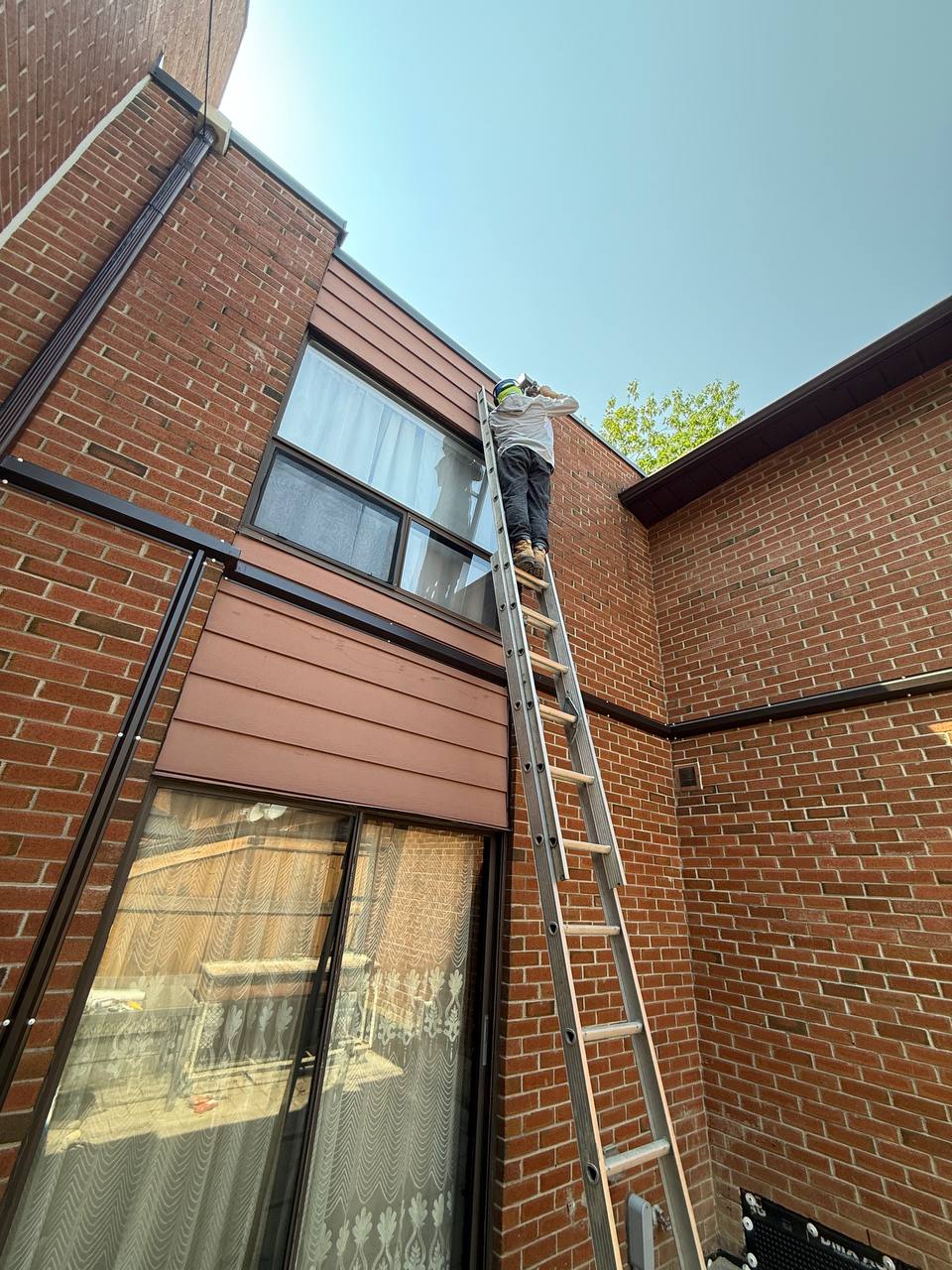
Not every tired elevation needs a full exterior renovation. Not every “small repair” should be painted over a failing wall. The useful distinction in Ontario is whether the work is one defect or a set of dependent assemblies. Exterior renovations pull those assemblies into one sequence. A patch repair isolates a single, well-understood condition.
Homeowners in the GTA often receive both kinds of quotes for the same house. One number replaces a few boards. The other reshapes entries, trim, siding, and the porch roof. The right choice depends on moisture paths, the age of adjoining materials, and how long you intend to keep the building without opening it again.
What a patch repair can honestly do
A localized repair is appropriate when the failure is bounded: a rotten fascia run, a single window’s failed flashing, a short stretch of damaged siding with sound substrate behind it, a cracked concrete step that is not part of a larger drainage problem. The scope should name the stop point. “Fix the corner” is not a stop point. “Replace fascia from the north-east downspout to the porch beam, including drip edge and kick-out” is.
Patch work still needs proper detailing. Covering rot without repairing the leak that caused it is a delay, not a repair. If opening the piece reveals wet sheathing or failed membrane, the scope should be allowed to change in writing rather than being hidden.
When the elevation needs a renovation
Coordinated exterior work makes sense when several materials on the same face are at the end of their service life, when leaks have no single obvious source, or when a new entry, window layout, or cladding change will leave orphaned trims and flashings if done in isolation. Building restoration and new siding often travel together for this reason.
An exterior renovation is also a chance to correct sequences that a series of cheap patches made worse: siding butted into a roof without a kick-out, trim that traps water, a porch that sheds onto a door sill. Those are not aesthetic upgrades. They are how the next winter is different from the last ten.
Entries, garage faces, and street elevations are where owners feel the most pressure to “just make it look better.” Looking better without managing water is how a freshly painted fascia fails the following March. If the renovation includes colour and trim changes, the flashings and substrate still come first. The finish is the last coat on a working assembly.
Windows and doors replaced as part of an exterior renovation should be treated as envelope openings, not as furniture. Pans, head flashings, and integration with siding or cladding belong in the same number. A beautiful new door in an unflashed rough opening is a leak with a warranty card on the glass.
Sequencing, weather, and occupied homes
Opening more than one assembly at a time requires a weather plan. Entries must stay usable. Gardens, meters, and neighbouring properties need protection. Carpentry, envelope work, and finish carpentry should be ordered so that flashings are in place before finishes, not after.
SIG Construction prices and documents change orders when concealed conditions appear. That is slower than pretending the wall was empty. It is how occupied houses stay dry during the job. Coverage and site habits are described under health and safety.
Choosing a starting point
Walk the elevation after rain if you can. Note staining, soft trim, ice locations, and interior rooms that react to weather. Photograph whole elevations and close-ups of failed joints. Decide whether you are trying to stop one leak or reset a face of the house for another decade.
Request an estimate with that distinction stated in your own words. Contact the office if you want help deciding before anyone prices finishes. An honest patch is a professional job. A renovation that is really a pile of unrelated patches is not.
Next step
If this sounds like your building, send the existing conditions.
Share the address, a short scope, and photos. Coverage and jobsite practices are on thehealth and safety page.
More notes
Related construction notes.
- How to Prepare a Construction Estimate Request in OntarioWhat to send so a GTA contractor can price restoration, envelope, or renovation work: site, scope, photos, access, and insurance needs.
- Selective Demolition Before ReconstructionControlled removal on Ontario jobsites: protecting what stays, exposing what must be seen, and stopping at a defined plane.
- Painting and Drywall: The Finish Depends on the SubstrateWall and ceiling repairs, finishing levels, and paint only last when the board, joints, and preparation are specified — not hoped for.