Construction article
Concrete and Masonry Repairs Through Ontario Freeze-Thaw Cycles
How freeze-thaw, drainage, and adjoining materials shape concrete, brick, and paver repairs on GTA properties.
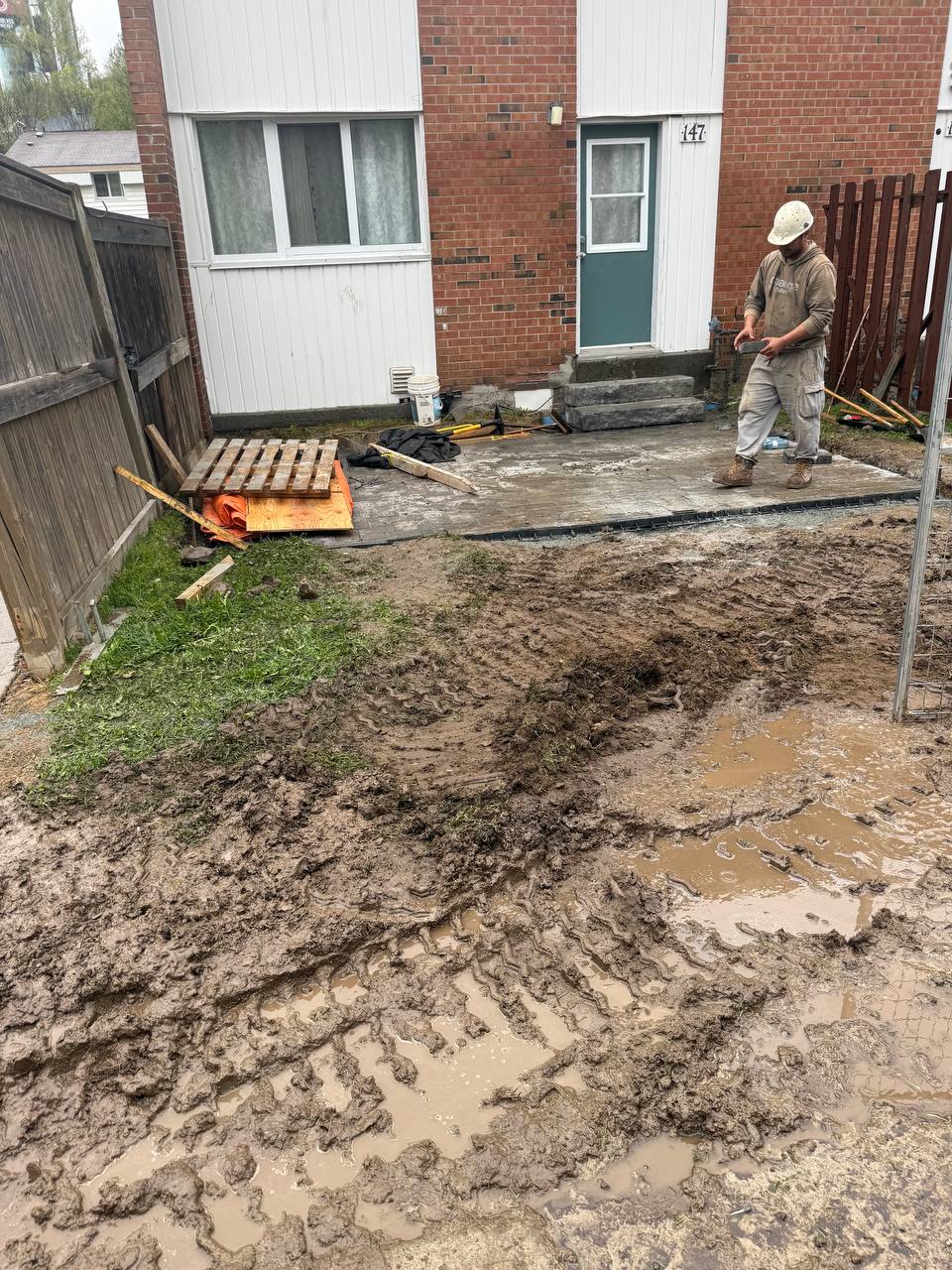
Ontario concrete and masonry fail in predictable ways. Water enters a crack or an open joint, freezes, and pries the assembly apart. De-icing salts accelerate surface scaling. Poor drainage keeps the same slab wet all winter. Concrete and masonry repairs that ignore those mechanisms are cosmetic. They look finished in July and open again in March.
This is true of house foundations at grade, brick veneers, chimney bases, porch slabs, and the hardscape that meets the building. SIG Construction treats these repairs as part of the property’s water story, not as isolated patches of grey material.
Diagnose the water, then the crack
A cracked walkway that sits in a puddle will crack again after it is replaced. A brick veneer that is stained below a failed gutter is a drainage problem before it is a masonry problem. Building restoration and masonry work overlap whenever the wall and the site are feeding each other water.
Chimneys, window sills, and porch wing walls collect water because they are horizontal or near-horizontal in a climate that freezes. Caps, through-wall flashings, and drip edges belong in the same review as the cracked brick. Repointing a chimney that still takes water at the cap is seasonal entertainment, not a repair.
Driveways and garage aprons often fail at the joint with the house or the city sidewalk. Those joints move. A pour that ignores the joint design, the sub-base, and where meltwater sits will scale even if the mix is sound. Ask what is under the slab and where the water goes before asking what colour the new concrete will be.
Useful questions: Does the area hold water after rain? Is there a downspout dumping against the wall? Is the adjoining landscaping or hardscaping graded toward the building? Are movement joints missing in a long wall or slab? Photos after a storm are more valuable than photos on a dry afternoon.
What a repair scope should name
Removal limits, substrate preparation, joint design, mix or unit matching, and how the new work meets existing materials should all be written down. “Fix the steps” does not say whether the stringer is rotten, whether the landing drains backward, or whether the railing posts are part of the job.
Unit masonry — brick and block — needs attention to matching, weeps, and flashing at openings. Repointing that uses the wrong mortar can damage historic or even ordinary brick. New concrete against old needs a realistic conversation about colour and texture. Perfect invisibility is not always achievable; an honest blend is.
Below-grade or at-grade waterproofing may belong in the same visit as a foundation repair. Sealant alone on a structural crack is not waterproofing. See caulking and waterproofing for joint work that is actually a joint, not a substitute for drainage.
Access, occupied sites, and winter timing
Masonry and concrete have temperature limits. Placing or repairing in the wrong window is how a “quick job” becomes a spring callback. Occupied properties need protected walkways and a plan for curing time before the steps are used.
Jobsite protection, written scopes, and insurance documentation for Ontario work are covered on health and safety. Certificate numbers are provided when a contract needs them, not published on the internet.
Starting the conversation
Share the address, the element (steps, walk, veneer, pad), photos of the defect and of how water sits on the site, and whether the area is a required exit. Note any interior dampness at the same wall.
Request an estimate for a defined repair. Contact the office if the masonry is part of a larger restoration. Freeze-thaw will test the work. The repair that lasts is the one that changed how water moves, not only how the surface looked on handover day.
Next step
If this sounds like your building, send the existing conditions.
Share the address, a short scope, and photos. Coverage and jobsite practices are on thehealth and safety page.
More notes
Related construction notes.
- How to Prepare a Construction Estimate Request in OntarioWhat to send so a GTA contractor can price restoration, envelope, or renovation work: site, scope, photos, access, and insurance needs.
- Selective Demolition Before ReconstructionControlled removal on Ontario jobsites: protecting what stays, exposing what must be seen, and stopping at a defined plane.
- Painting and Drywall: The Finish Depends on the SubstrateWall and ceiling repairs, finishing levels, and paint only last when the board, joints, and preparation are specified — not hoped for.